





Under product liability law, injured consumers can recover damages from any party in the chain of commerce who is responsible for the defective product—that is, anyone who contributed to putting the defective product into consumers’ hands.
1 Defective Product Claims Under California Law
2 How California Decides Whether a Design Is Defective
3 Who Can Be Liable for a Defective Product?
4 Defective Vehicles and Auto Parts
5 Product Recalls and Your Claim
6 Compensation In a Product Liability Claim
7 What to Do After a Defective Product Injury
8 Product Liability FAQs
9 How do you win a product liability lawsuit?
10 How do you prove a product liability claim
11 What kind of lawsuit is a product liability claim?
12 What are the 3 types of product liability claims?
13 How long do I have to file a product liability claim?
14 How much does a product liability attorney cost?
15 Do I need to keep the defective product?
16 Can I sue if I misused the product?
17 What if I never got the recall repair done?
18 Contact Our San Diego Product Liability Attorneys
Defective Product Claims Under California Law
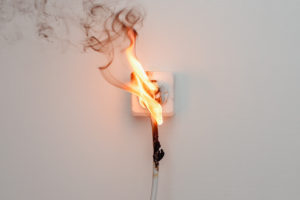
In California, a defective product claim and a product liability claim are the same kind of case. A product had a flaw, and the flaw hurt someone. Defective products are sold every day. A weak sidewall in a tire can lead to a rollover car crash. A jagged piece of metal in a can of tuna can cause a severe cut to the mouth or throat. Christmas lights that are prone to overheating without warning can start a serious house fire.
California’s strict liability rule comes from Greenman v. Yuba Power Products (1963), a case about a power tool that threw a piece of wood into its owner’s forehead. The California Supreme Court held that a manufacturer is strictly liable when a product it puts on the market, knowing it will be used without inspection for defects, has a defect that injures a person. The cost of those injuries belongs with the manufacturer, not with injured people “who are powerless to protect themselves.”
Strict liability means you do not have to prove the company was careless. The question is whether the product was defective and whether the defect was a substantial factor in causing your harm. It is not automatic, though. California courts have said strict liability is not absolute liability.
California’s civil jury instructions (CACI No. 1200) recognize three kinds of defect: a manufacturing defect, a defective design, and missing or insufficient instructions or warnings.
How California Decides Whether a Design Is Defective
California uses two tests for design defects, both set out in Barker v. Lull Engineering Co. (1978), a case about a high-lift loader. You can rely on either test, and a jury can hear both in the same case.
Under the consumer expectations test, the question is whether the product performed as safely as an ordinary consumer would expect when used, or misused, in an intended or reasonably foreseeable way. The court decides first whether this test can apply to the product.
Under the risk-benefit test, you show that the product’s design was a substantial factor in causing your harm. Then the burden shifts. The manufacturer must prove the benefits of its design outweigh the risks, including how serious and how likely the harm was and whether a safer design was feasible and what it would cost. Barker put that burden on the manufacturer because those are technical matters the manufacturer knows best.
Who Can Be Liable for a Defective Product?
Manufacturers and distributors of products owe a duty to make safe the products they create, sell, or distribute for use or consumption. When they breach this duty and cause harm, they are on the hook for the resulting injuries. Liability can reach more than the brand name on the box:
- The company that made the finished product.
- The maker of a component part, if that component was itself defective and caused the harm.
- Distributors that brought the product to market.
- The retailer that sold it.
Retailers are on that list because of Vandermark v. Ford Motor Co. (1964). The California Supreme Court called retailers “an integral part of the overall producing and marketing enterprise” and noted that the retailer is sometimes the only one the injured person can reach. Not every company that handled a product is liable. Courts look at factors such as whether it profited from the product and played an integral part in bringing it to market.
You do not have to be the buyer or the user. If you are harmed by a defective product, whether you were using the product yourself or were harmed by someone else’s use of it, you may have a claim. Elmore v. American Motors Corp. (1969) gave bystanders at least the same protection as users when injury to a bystander is reasonably foreseeable, because a bystander usually has no chance to inspect the product or choose who made it.
Defective Vehicles and Auto Parts
Gomez Trial Attorneys is nationally recognized in the field of products liability cases, and our San Diego defective products attorneys have represented injured consumers against the largest and most powerful manufacturers and companies in the entire world. We have represented victims of virtually every conceivable automotive and industrial product defect, resulting in death and serious injuries to consumers. Some examples include the Ford Explorer rollovers, the fuel-fed car fires, defective seat belts that fail or “inertially release” in a collision, and sudden unintended acceleration in Toyota vehicles.
Our San Diego defective products lawyers have appeared in national, regional, and local media as experts and have recovered millions for our clients. If you or a loved one has suffered loss due to a dangerous car, truck, or other type of automobile, we can help.
Product Recalls and Your Claim
You do not need a recall to bring a product liability claim. None of the elements in California’s strict liability jury instructions asks whether the product was recalled. They ask whether it was defective and whether the defect caused your harm.
A recall can still help, so check the federal databases for the product that hurt you:
- Vehicles, tires, car seats and equipment: NHTSA’s recall lookup, searchable by VIN or license plate.
- Household and other consumer products: CPSC recalls and product safety warnings.
- Medical devices: the FDA’s list of the most serious medical device recalls.
Recalls also open a second theory. A company that learns of a danger after the sale and fails to recall or retrofit the product when a reasonable company would have can be found negligent for that failure, apart from whether the design was defective.
Compensation In a Product Liability Claim
Three primary types of compensation may be recoverable in a product liability claim: economic damages, non-economic damages, and punitive damages.
The purpose of economic damages is to reimburse a victim for their financial losses. This includes medical bills, lost wages, and property damage. In some cases, economic damages include future losses such as the loss of earning capacity if a victim is left unable to work or return to the same or a similar position due to their injuries.
Non-economic damages are intended to compensate a victim for their intangible losses such as pain and suffering, emotional distress, and loss of enjoyment of life. These types of damages can be more difficult to quantify than economic damages but are no less important.
Punitive damages may also be available in some cases but are typically only awarded when the defendant’s actions are found to be particularly reckless or egregious.
How much you will receive in your product liability claim depends on the specific facts and circumstances of your case. A number of different factors will be taken into account, including the severity of your injuries, the cost of your medical treatment, the amount of lost wages, and the impact that your injuries have had on your quality of life.
If you have suffered permanent injuries or disfigurement, you may be entitled to additional compensation. The best way to determine how much your claim is worth is to speak with an experienced product liability attorney.
What to Do After a Defective Product Injury
If you’ve been injured by a defective product, you may be wondering what your next steps should be. Consider taking the following actions:
1. Get Medical Help
The first thing you need to do is seek medical attention for your injuries. This will not only ensure that you get the treatment you need, but it will also create a record of your injuries, which will be important if you decide to pursue a product liability claim.
2. Notify the Manufacturer or Seller
Once you’ve sought medical attention, the next step is to notify the manufacturer or seller of the defective product. You should do this in writing and keep a copy of your correspondence for your records.
3. Gather Evidence
It’s important to gather as much evidence as possible to support your claim. This may include things like medical records, photographs of the defective product, and receipts or other documentation showing that you purchased the product.
4. Speak with an Experienced Attorney
After you’ve gathered all the evidence, it’s time to speak with an experienced product liability attorney. They can help you understand your legal rights and discuss next steps with you. An attorney can also negotiate with the manufacturers on your behalf and fight for the compensation you deserve.
Product Liability FAQs
How do you win a product liability lawsuit?
Winning a product liability lawsuit depends on the specifics of the case and what type of defect was present.
Design Defect Claims
In a design defect claim, the victim is alleging that the product was defective by design. In other words, the injury was caused by a flaw in the overall design of the product. To win a design defect claim, you must prove that:
- The product was defectively designed;
- You were using the product as intended/in a foreseeable manner;
- The design defect was a proximate cause of your injuries; and
- You suffered losses/damages because of your injuries.
Manufacturing Defect Claims
A manufacturing defect claim alleges that the injury was caused by a mistake that occurred during the manufacturing process. To win a manufacturing defect claim, you must prove that:
- The product was manufactured defectively;
- You were using the product as intended/in a foreseeable manner;
- The manufacturing defect was a proximate cause of your injuries; and
- You suffered losses/damages because of your injuries.
Failure to Warn Claims
This type of claim alleges that the manufacturer failed to provide adequate warnings about the risks associated with using the product. To win a failure to warn claim, you must prove that:
- You were using the product as intended/in a foreseeable manner;
- The manufacturer failed to provide adequate warnings about the risks associated with using the product;
- The failure to warn was a proximate cause of your injuries;
- You suffered losses/damages because of your injuries.
Determining which type of claim is appropriate in your case is essential to success. Proving this type of claim can be complex, so if you have been injured by a defective product, contact an experienced personal injury attorney today for help pursuing your claim.
How do you prove a product liability claim?
When it comes to product liability cases, the type and amount of evidence necessary to prove your claim will vary depending on the specifics of your case. That said, a few key types of evidence are commonly used in product liability claims.
1. Documentation
One of the most important pieces of evidence in a product liability case is documentation. This can include things like medical records, bills, receipts, contracts, and warranties. This type of documentation can help prove both the extent of your injuries and who made and sold the defective product.
2. Eyewitness Testimony
If you were injured in someone else’s presence, you can also rely on eyewitness testimony to prove your claim. This could be testimony from friends or family members who saw the accident take place, or it could be video footage if the accident was captured on camera.
3. Expert Testimony
In some cases, you may also need to bring in an expert witness to testify about the defects in the product and how those defects caused your injuries. This could be an engineer who can attest to the design flaws in the product or a medical expert who can discuss how the injuries you sustained were caused by the defective product.
4. Physical Evidence
Physical evidence can also be important in a product liability case. This could include things like photographs of the scene of the accident or pictures of your injuries. It could also include the defective product itself if it is still available.
What kind of lawsuit is a product liability claim?
Product liability law is an area of civil law that allows individuals to hold manufacturers, distributors, suppliers, retailers, and others accountable for injuries sustained by defective products. In other words, product liability law is what allows people who are injured by defective products to recover compensation from the companies responsible for making and selling those products.
What are the 3 types of product liability claims?
Design defects, manufacturing defects, and marketing defects are the three primary types of product liability claims.
Design defects are inherent in the design of a product—meaning that the problem exists even though the product is made exactly according to its blueprint or specifications. Because the design is defective, all products manufactured from that design will also be defective.
Manufacturing defects occur when a product is not made according to its blueprint or specifications. In other words, there is something wrong with the specific product or batch of products, even though the overall design is sound. An example of a manufacturing defect would be if there was a flaw in the production process that caused one batch of tires to be defective.
Marketing defects occur when a product does not have proper warnings or instructions. For example, if a power saw did not come with proper safety instructions and someone was injured as a result, then that person could sue for damages based on a marketing defect.
How long do I have to file a product liability claim?
In San Diego, you must file a product liability claim within 2 years from the date of your injury in most cases. Certain circumstances will shorten or extend the life of the case, so it’s important to speak with a lawyer right away to make sure you don’t miss the deadline. If you fail to file your claim on time, you will lose the ability to recover any compensation.
The two-year limit comes from California Code of Civil Procedure section 335.1, which covers injury to, or the death of, a person caused by the wrongful act or neglect of another. The same two years apply to a wrongful death claim caused by a defective product. The clock usually starts on the date of injury, or for a wrongful death claim, on the date of death. Some product injuries do not reveal their cause right away. Under the discovery rule, the clock can start later, when you suspected, or had reason to suspect, that someone’s wrongdoing caused your harm. Once you suspect it, you have to investigate. You cannot wait for the facts to find you.
In Fox v. Ethicon Endo-Surgery (2005), a patient learned well after her gastric bypass surgery that a surgical stapler may have failed. The California Supreme Court held that her product claim could still be timely, even though the clock on her malpractice claim had already started, if a reasonable investigation would not have revealed the stapler’s role sooner.
How much does a product liability attorney cost?
Most product liability attorneys work on a contingency fee basis. This means that their payment is contingent upon the success of your case; they don’t get paid unless your case is settled or won at trial. Once you are awarded compensation, your attorney takes a percentage of that as their fee, usually between 33 and 40 percent. This allows everyone to receive quality legal representation regardless of socioeconomic status.
Do I need to keep the defective product?
Yes, if you can. The product itself is usually the best evidence of what went wrong. Do not repair it, return it to the store, or send it to the manufacturer. Keep the packaging, manual and receipt, and photograph everything. If the product is gone, the case gets harder but may still be possible. A design defect is built into every unit of the product line, so an identical unit can show the same flaw.
Can I sue if I misused the product?
Misuse does not automatically end a claim. California requires manufacturers to foresee some degree of misuse and take reasonable precautions against it. Misuse or modification is a complete defense only if the company proves it was so highly extraordinary that it was not reasonably foreseeable and was the sole cause of your harm. If your own conduct contributed to the injury but was not the only cause, your compensation can be reduced by your share of fault rather than barred.
What if I never got the recall repair done?
You may still have a claim. Missing or ignoring a recall notice does not automatically let the manufacturer off the hook. A California appeals court put it this way: “A manufacturer cannot delegate responsibility for the safety of its product to dealers, much less purchasers.” The manufacturer can still argue that your own negligence contributed, which would reduce your compensation by your share of responsibility.
Contact Our San Diego Product Liability Attorneys

The experienced San Diego product liability lawyers at Gomez Trial Attorneys are here to help you after a serious consumer product injury. You deserve full and fair compensation after suffering harm because of a defective product.
We offer a free case evaluation and there’s no obligation if you call. If you’re wondering “What’s my product liability case worth?” or “Do I have a product liability case?” call us today for your free consultation. Our San Diego attorneys take all product liability cases on a contingency basis, meaning you pay nothing unless we win your case.
Contact the experienced legal team at Gomez Trial Attorneys at (619) 237-3490 to schedule a free case consultation; we can discuss the specifics of your product liability claim, and help determine the best path forward.
Review: 5/5
★ ★ ★ ★ ★
“I really appreciate these people they did everything in their power to make our family comfortable and appreciate the effort they did for us we really appreciate everything that they have done.”
Review by: Jennifer L.